

ERCP
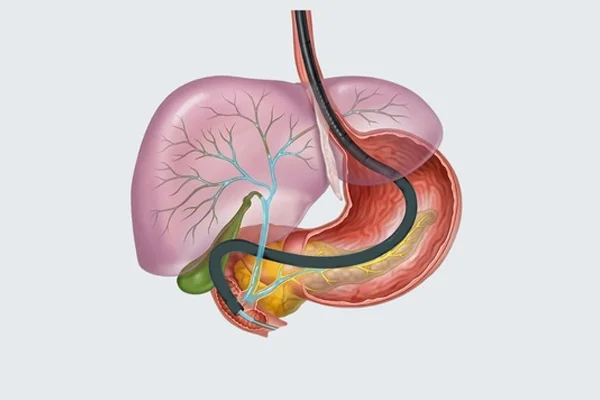
ERCP in Anand Vihar is an advanced endoscopic procedure used to diagnose and treat selected conditions affecting the bile ducts and pancreatic ducts. ERCP, or Endoscopic Retrograde Cholangiopancreatography, combines endoscopy with specialized X-ray imaging to identify blockages, stones, strictures and other abnormalities within these ducts.
Dr. Rishi Raman provides advanced gastroenterology and hepatobiliary care, with expertise in procedures including ERCP, Endoscopy, Colonoscopy and EUS. ERCP is generally performed when a therapeutic intervention is required or when other investigations indicate a problem involving the bile or pancreatic ducts.
What Is ERCP?
ERCP is a specialized procedure used to access the bile and pancreatic ducts through the digestive tract.
During the procedure, an endoscope is passed through the mouth into the duodenum. A small opening called the major papilla provides access to the bile and pancreatic ducts. Contrast material may then be introduced into the ducts while imaging is performed to identify abnormalities.
Unlike many purely diagnostic tests, ERCP is primarily used today for therapeutic treatment of specific bile duct and pancreatic duct problems.
When Is ERCP Recommended?
Your gastroenterologist may recommend ERCP when there is evidence or a strong suspicion of a condition requiring intervention.
Common indications include:
- Common bile duct stones
- Bile duct obstruction
- Bile duct strictures
- Bile duct leaks
- Certain pancreatic duct disorders
- Obstructive jaundice
- Selected cases of cholangitis
- Removal of retained bile duct stones
- Placement or management of biliary stents
- Selected pancreatic duct interventions
The decision to perform ERCP depends on imaging findings, symptoms, laboratory results and the overall clinical situation.
ERCP for Bile Duct Stones
Gallstones can sometimes migrate from the gallbladder into the common bile duct. These stones may obstruct bile flow and cause pain, jaundice or infection.
During ERCP, selected bile duct stones can be removed using specialized endoscopic techniques.
This may involve:
- Accessing the bile duct
- Performing a sphincterotomy when appropriate
- Extracting stones using a balloon or basket
- Placing a temporary stent when necessary
- Confirming adequate drainage
The specific technique depends on the size, number and location of the stones.
ERCP for Obstructive Jaundice
Obstruction of the bile duct can prevent normal flow of bile into the intestine and may result in jaundice.
Possible symptoms include:
- Yellowing of the eyes or skin
- Dark urine
- Pale stools
- Itching
- Abdominal discomfort
- Fever in cases associated with infection
ERCP may help restore bile drainage when an obstruction can be treated endoscopically.
ERCP for Bile Duct Strictures
A bile duct stricture is a narrowing of the duct that can interfere with normal bile flow.
Depending on the cause and clinical situation, ERCP may allow the doctor to:
- Assess the narrowing
- Obtain appropriate samples in selected cases
- Dilate the narrowed area
- Insert a stent to maintain drainage
Further evaluation may be required to determine the underlying cause of the stricture.
Biliary Stent Placement
A biliary stent is a small tube that can be placed within a narrowed or obstructed bile duct to facilitate bile drainage.
Stenting may be considered in selected situations involving:
- Benign strictures
- Malignant obstruction
- Bile duct injury or leakage
- Incomplete stone clearance
- Other causes of impaired biliary drainage
The type and duration of stenting depend on the underlying condition.
How Is ERCP Performed?
ERCP is performed in a specialized medical setting with appropriate monitoring.
Generally:
- The patient receives fasting and medication instructions before the procedure.
- Sedation or anesthesia is administered as appropriate.
- A flexible endoscope is passed through the mouth into the duodenum.
- The opening of the bile and pancreatic ducts is identified.
- A small catheter is introduced into the required duct.
- Contrast material may be injected while imaging is performed.
- Therapeutic treatment such as stone removal, dilation or stent placement may be performed.
- The endoscope is removed after the procedure.
The exact steps depend on the condition being treated.
Is ERCP Painful?
ERCP is generally performed under sedation or anesthesia to improve patient comfort. You may experience temporary throat discomfort or bloating afterward.
Because ERCP is an advanced therapeutic procedure, your medical team will discuss the expected benefits, risks and preparation requirements before the procedure.
Preparation Before ERCP
Proper preparation is important for safe ERCP.
You may be instructed to:
- Fast for a specified period
- Adjust certain medications if advised
- Inform the doctor about blood thinners
- Report allergies, particularly previous reactions to contrast material
- Inform the medical team about significant medical conditions
- Arrange transportation and post-procedure support if required
Follow the individualized instructions provided by your gastroenterology team.
Recovery After ERCP
After ERCP, you are usually monitored for a period of time to ensure there are no immediate complications.
Depending on the medications used, you may experience:
- Mild throat discomfort
- Bloating
- Temporary abdominal discomfort
- Drowsiness
If sedation or anesthesia is used, you may need an accompanying adult and should follow the post-procedure instructions provided by the medical team.
Benefits of ERCP
When appropriately indicated, ERCP can provide important therapeutic benefits.
It may allow doctors to:
- Remove bile duct stones
- Restore bile drainage
- Treat selected bile duct strictures
- Place biliary stents
- Manage selected bile leaks
- Treat certain pancreatic duct problems
- Avoid or reduce the need for more invasive surgical intervention in appropriate cases
ERCP is selected when its potential therapeutic benefits outweigh the associated risks.
Risks and Complications of ERCP
ERCP is an advanced procedure and, like any invasive intervention, carries potential risks.
Possible complications include:
- Pancreatitis
- Bleeding
- Infection
- Perforation
- Reactions to sedation or anesthesia
- Problems related to stents or instrumentation
The risk varies depending on the patient's condition and the type and complexity of treatment performed.
Your gastroenterologist will explain the procedure-specific risks before obtaining consent.
ERCP vs MRCP
MRCP and ERCP are different procedures.
MRCP is a non-invasive MRI-based imaging technique used to visualize the bile and pancreatic ducts.
ERCP is an endoscopic procedure primarily used when treatment or direct intervention is required.
Depending on the clinical situation, MRCP, EUS or other imaging may be performed before ERCP to determine whether an intervention is necessary.
Why Choose Dr. Rishi Raman?
Dr. Rishi Raman is a senior gastroenterologist with qualifications including MBBS, MD (Internal Medicine), and DM (Gastroenterology & Hepatology), along with specialized training in advanced endoscopy.
His clinical expertise includes ERCP, Endoscopy, Colonoscopy and EUS, supporting comprehensive evaluation and treatment of complex gastrointestinal, hepatobiliary and pancreatic conditions.
For patients seeking ERCP in Anand Vihar, the procedure is considered based on accurate diagnosis, clinical indications and an individualized treatment plan.
Comprehensive Hepatobiliary & Pancreatic Care
ERCP may form part of a broader diagnostic and therapeutic approach. Depending on the condition, evaluation may include:
- Liver function assessment
- Ultrasound or other imaging
- MRCP
- EUS
- Endoscopy
- ERCP
- Biliary stent management
- Gallstone and bile duct evaluation
- Pancreatic disease assessment
This integrated approach helps determine the most appropriate treatment for each patient.
When Should You Consult a Gastroenterologist?
You should consider specialist evaluation if you experience symptoms such as:
- Persistent jaundice
- Recurrent upper abdominal pain
- Dark urine with yellow eyes
- Unexplained abnormal liver tests
- Fever with jaundice
- Suspected bile duct stones
- Persistent itching associated with jaundice
- Symptoms suggesting bile duct or pancreatic obstruction
Fever, jaundice and significant abdominal pain occurring together can indicate a serious biliary infection and require urgent medical assessment.
Frequently Asked Questions
1. What is ERCP used for?
ERCP is primarily used to treat selected conditions affecting the bile and pancreatic ducts, including bile duct stones, strictures, obstruction, leaks and certain pancreatic duct disorders.
2. Is ERCP a surgery?
ERCP is an endoscopic procedure rather than conventional open surgery. It allows therapeutic treatment through an endoscope and may help some patients avoid more invasive surgical procedures.
3. Is ERCP painful?
ERCP is generally performed under sedation or anesthesia, so patients typically do not experience significant discomfort during the procedure. Temporary throat or abdominal discomfort may occur afterward.
4. How long does an ERCP procedure take?
The duration varies depending on the condition and treatment required. Simple interventions may be relatively brief, while complex stone removal or stent procedures can take longer.
5. Can ERCP remove bile duct stones?
Yes. Selected common bile duct stones can be removed during ERCP using specialized endoscopic techniques.
6. Is ERCP safe?
ERCP is routinely performed when clinically indicated, but it carries potential risks such as pancreatitis, bleeding, infection and perforation. Your doctor will assess your individual risk before the procedure.