

PEG Insertion
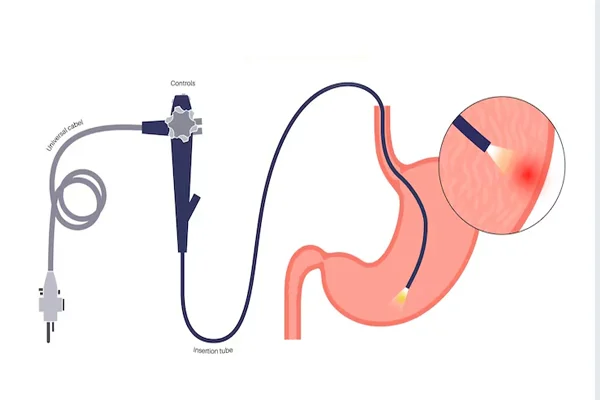
PEG Insertion in Anand Vihar is a minimally invasive procedure used to provide long-term nutritional support when a person is unable to take adequate food or fluids safely through the mouth. PEG stands for Percutaneous Endoscopic Gastrostomy and involves placing a feeding tube directly into the stomach through the abdominal wall with endoscopic guidance.
Dr. Rishi Raman provides specialized gastroenterology and advanced endoscopic care for patients who may require enteral nutritional support. The decision to perform PEG insertion is based on the patient's medical condition, swallowing ability, nutritional requirements and expected duration of feeding support.
What Is PEG Insertion?
Percutaneous Endoscopic Gastrostomy is a procedure in which a flexible endoscope is used to examine the stomach and guide placement of a feeding tube through the abdominal wall.
The tube provides direct access to the stomach, allowing prescribed nutrition, fluids and medications to be administered when oral intake is inadequate or unsafe.
PEG may be considered as a long-term enteral feeding option in appropriately selected patients.
Who May Need a PEG Feeding Tube?
PEG insertion may be considered for patients who cannot maintain adequate oral nutrition for an extended period.
Possible situations include:
- Neurological disorders affecting swallowing
- Stroke-related swallowing difficulties
- Certain neurodegenerative diseases
- Head and neck conditions affecting oral intake
- Prolonged inability to swallow safely
- Severe nutritional problems
- Selected patients requiring long-term enteral feeding
The decision should be individualized and generally involves assessment of the underlying disease, nutritional status, swallowing function and overall prognosis.
PEG for Swallowing Difficulties
Some neurological and other medical conditions can significantly impair swallowing. When swallowing is unsafe, food or liquid can enter the airway, increasing the risk of aspiration.
In selected patients who are expected to require prolonged nutritional support, PEG may provide an alternative route for delivering nutrition directly into the stomach.
PEG does not necessarily eliminate the underlying swallowing problem. The need for continued swallowing therapy or oral intake assessment depends on the patient's condition.
How Is PEG Insertion Performed?
PEG placement is performed using endoscopic guidance.
The general procedure involves:
- The patient is prepared according to the medical team's instructions.
- Sedation or anesthesia is provided as appropriate.
- An endoscope is introduced through the mouth into the stomach.
- The stomach is examined and an appropriate insertion site is identified.
- The abdominal skin is cleaned and local anesthesia is administered.
- A small opening is created through the abdominal wall.
- The feeding tube is guided into the stomach.
- The tube is secured to prevent unwanted movement.
- The endoscope is removed after confirming appropriate placement.
The exact technique may vary depending on the patient's anatomy and clinical circumstances.
What Can Be Given Through a PEG Tube?
Once the tube has been appropriately placed and cleared for use, it may be used for prescribed:
- Enteral nutrition
- Fluids
- Selected medications
The type and amount of nutrition should be determined by the treating medical team, often with input from a dietitian when appropriate.
Not every medication or food preparation is suitable for administration through a PEG tube.
Benefits of PEG Insertion
For appropriately selected patients, PEG can provide several potential benefits:
- Direct access to the stomach for nutrition
- Long-term enteral feeding support
- Administration of fluids and selected medications
- Alternative to prolonged nasal feeding in suitable patients
- Support for maintaining nutritional intake when oral feeding is inadequate
PEG is generally considered when longer-term enteral access is expected to be beneficial.
PEG Tube Care
Proper tube care is important after placement.
Patients and caregivers may receive instructions regarding:
- Cleaning the tube and surrounding skin
- Flushing the tube appropriately
- Administering prescribed feeds
- Giving suitable medications
- Checking for signs of infection
- Preventing tube blockage
- Managing the tube according to medical instructions
Care instructions may differ depending on the type of tube and the patient's medical needs.
What Happens After PEG Insertion?
Patients are monitored after the procedure to assess their recovery and the tube insertion site.
The healthcare team may provide instructions regarding:
- When feeding can begin
- Tube flushing
- Medication administration
- Dressing and site care
- Warning signs of complications
- Follow-up requirements
The feeding schedule is generally introduced according to the patient's clinical condition and the treating team's recommendations.
Possible Risks and Complications
PEG insertion is commonly performed, but like any invasive procedure, it carries potential risks.
Possible complications include:
- Bleeding
- Infection around the tube site
- Leakage
- Tube blockage
- Tube displacement
- Skin irritation
- Aspiration-related complications
- Injury to nearby structures
- Rarely, more serious abdominal complications
Patients and caregivers should seek medical advice if there is significant bleeding, severe abdominal pain, fever, persistent vomiting or sudden tube displacement.
When Should You Seek Medical Help After PEG Placement?
Contact your healthcare team promptly if you notice:
- Increasing redness or swelling around the tube
- Pus or significant discharge
- Persistent bleeding
- Fever
- Severe abdominal pain
- Repeated vomiting
- Leakage of significant amounts of feeding fluid
- A blocked or displaced tube
- Difficulty using the tube
A displaced feeding tube should not be manipulated or replaced without appropriate medical guidance.
PEG vs Nasogastric Feeding Tube
A nasogastric (NG) tube passes through the nose into the stomach, while a PEG tube enters the stomach through the abdominal wall.
NG feeding may be suitable when nutritional support is required for a shorter period, whereas PEG may be considered when longer-term enteral feeding is anticipated.
The appropriate option depends on the patient's condition, expected duration of feeding and overall treatment plan.
Why Choose Dr. Rishi Raman?
Dr. Rishi Raman is a senior gastroenterologist with qualifications including MBBS, MD (Internal Medicine), and DM (Gastroenterology & Hepatology), with specialized expertise in advanced endoscopic procedures.
His clinical expertise includes PEG Insertion, Endoscopy, Colonoscopy, ERCP and EUS, allowing patients requiring nutritional access to receive evaluation within a comprehensive gastroenterology care framework.
For patients seeking PEG Insertion in Anand Vihar, the procedure is considered after careful assessment of the patient's nutritional, swallowing and overall medical needs.
Comprehensive Gastroenterology & Nutritional Support
PEG placement may be part of a broader multidisciplinary treatment plan. Depending on the patient's condition, care may involve:
- Swallowing assessment
- Nutritional evaluation
- Endoscopy
- PEG insertion
- Enteral feeding management
- Tube care and follow-up
- Management of the underlying gastrointestinal or neurological condition
- Coordination with other specialists when required
This approach helps ensure that nutritional support is aligned with the patient's overall medical needs.
When Should You Consider PEG Evaluation?
A gastroenterology consultation may be appropriate when a patient has:
- Persistent inability to swallow safely
- Inadequate oral nutritional intake
- Significant unintentional nutritional decline
- A medical condition expected to require prolonged enteral feeding
- Repeated problems with oral feeding
- Difficulty maintaining hydration or nutrition through the mouth
PEG is not automatically appropriate for every patient with swallowing difficulty. The potential benefits, risks, goals of care and expected duration of nutritional support should be discussed with the treating team.
Frequently Asked Questions
1. What is PEG insertion?
PEG insertion is a procedure used to place a feeding tube directly into the stomach through the abdominal wall using endoscopic guidance.
2. Who needs a PEG tube?
It may be considered for selected patients who cannot safely or adequately obtain nutrition through the mouth and are expected to require longer-term enteral feeding.
3. Is PEG insertion a major surgery?
PEG placement is performed endoscopically and is less invasive than conventional open abdominal surgery, but it is still an invasive medical procedure with potential risks.
4. How long can a PEG tube remain in place?
The duration varies considerably depending on the patient's condition and ongoing nutritional requirements. Some patients may require it for an extended period, while others may eventually transition back to adequate oral intake.
5. Can medicines be given through a PEG tube?
Some medications can be administered through a PEG tube, but not all formulations are suitable. Medication administration should follow specific instructions from the treating healthcare team.
6. What should I do if the PEG tube becomes blocked or displaced?
Do not forcefully manipulate the tube. Contact the healthcare team promptly for appropriate assessment and guidance, particularly if the tube has been completely displaced.