

Urea Breath Test for H pylori
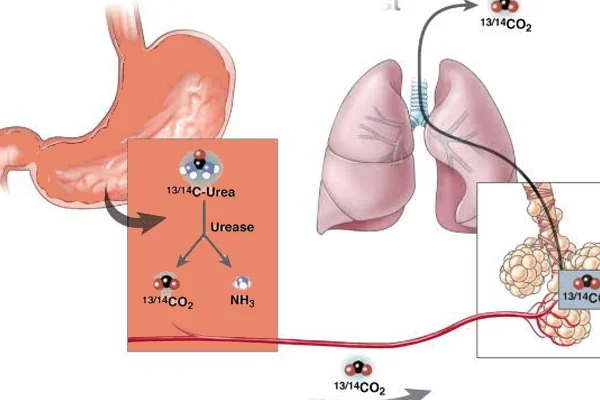
A Urea Breath Test for H. pylori is a non-invasive diagnostic test used to detect Helicobacter pylori (H. pylori) infection, a bacterium associated with gastritis, peptic ulcers and certain other upper gastrointestinal conditions. The test can also be used after treatment to determine whether the infection has been successfully eradicated.
At Dr. Rishi Raman’s gastroenterology practice in Anand Vihar, H. pylori testing may be recommended for patients with symptoms or clinical findings that suggest an H. pylori-related gastric condition. The test is simple, non-invasive and does not require an endoscopic procedure.
What Is H. pylori Infection?
Helicobacter pylori is a bacterium that can colonize the lining of the stomach. Many people with H. pylori infection may have few or no symptoms, while others can develop problems such as:
- Gastritis
- Recurrent stomach discomfort
- Upper abdominal pain
- Peptic ulcers
- Bloating or indigestion
- Nausea
- Early fullness after eating
Long-standing H. pylori infection can also be associated with an increased risk of certain stomach complications, making appropriate diagnosis and treatment important.
What Is a Urea Breath Test?
The Urea Breath Test detects H. pylori by identifying the activity of an enzyme called urease, which is produced by the bacteria.
During the test, the patient drinks a specially prepared urea solution. If H. pylori is present in the stomach, the bacteria can break down the urea and produce carbon dioxide that can be detected in the patient's breath.
This makes the test useful for identifying active H. pylori infection without requiring an invasive procedure.
When Is the H. pylori Breath Test Recommended?
A gastroenterologist may recommend the test in selected patients with:
- Persistent indigestion or dyspepsia
- Upper abdominal discomfort
- Suspected gastritis
- History of peptic ulcer disease
- Recurrent ulcer symptoms
- Previously diagnosed H. pylori infection
- Need for confirmation after H. pylori treatment
The decision to test depends on symptoms, medical history, age, previous investigations and other clinical factors.
H. pylori Test After Treatment
The Urea Breath Test can be particularly useful for confirming eradication of H. pylori after treatment.
Symptoms improving after antibiotics do not necessarily prove that the infection has been completely eliminated. Therefore, when appropriate, a follow-up test may be advised after completion of treatment and after allowing sufficient time for medications to clear from the system.
Your gastroenterologist will advise when testing should be performed and which medications need to be temporarily avoided.
How Is the Urea Breath Test Performed?
The test generally follows these steps:
- The patient follows the required fasting and medication instructions.
- A baseline breath sample is collected.
- The patient drinks a prepared urea solution.
- Another breath sample is collected after the specified interval.
- The samples are analyzed for changes associated with H. pylori activity.
- The result is interpreted by the gastroenterologist along with the patient's clinical history.
The test does not require an endoscope, biopsy or sedation.
Preparation for the H. pylori Breath Test
Proper preparation is important because certain medications can interfere with test accuracy.
Depending on your treatment history, the doctor may provide instructions regarding:
- Fasting before the test
- Recent or ongoing antibiotic use
- Proton pump inhibitors and other acid-suppressing medicines
- H. pylori treatment medications
- Other medicines that may affect the result
Do not stop prescribed medication on your own. Your gastroenterologist will tell you if and when any medication needs to be temporarily withheld before testing.
Is the Urea Breath Test Painful?
The Urea Breath Test is non-invasive and generally well tolerated. It involves drinking the test solution and providing breath samples.
There is no insertion of an endoscope, no biopsy and usually no sedation is required.
Advantages of Urea Breath Testing
The H. pylori breath test offers several benefits:
- Non-invasive testing
- No endoscopy required
- No tissue biopsy required
- Useful for detecting active H. pylori infection
- Can be used for post-treatment confirmation
- Generally quick and well tolerated
- Helps guide appropriate gastrointestinal management
Urea Breath Test vs Endoscopy
Both tests can play a role in evaluating H. pylori-related conditions, but they provide different information.
Urea Breath Test:
Detects active H. pylori infection without directly examining the stomach lining.
Endoscopy:
Allows the gastroenterologist to visually examine the esophagus, stomach and duodenum. It can also allow biopsies and treatment of certain abnormalities.
If there are alarm symptoms or other reasons for direct examination of the upper gastrointestinal tract, an endoscopy may be more appropriate than breath testing alone.
H. pylori and Stomach Ulcers
H. pylori is one of the important causes associated with peptic ulcer disease. If an infection is identified, appropriate eradication treatment may reduce the risk of persistent infection and ulcer recurrence.
Patients with recurrent upper abdominal pain, ulcer symptoms or a previous history of H. pylori should discuss appropriate testing and treatment with a gastroenterologist.
Why Choose Dr. Rishi Raman for H. pylori Testing in Anand Vihar?
Dr. Rishi Raman is a senior gastroenterologist specializing in gastrointestinal, digestive and liver disorders. His patient-first, evidence-based approach focuses on identifying the underlying cause of digestive symptoms and selecting investigations according to individual clinical needs.
When H. pylori infection is suspected, Urea Breath Testing can be incorporated into a comprehensive gastrointestinal evaluation and treatment plan.
Comprehensive Gastric & Digestive Care
Depending on symptoms and clinical findings, evaluation may include:
- Urea Breath Test for H. pylori
- Upper GI Endoscopy
- Biopsy when indicated
- Blood investigations
- Stool-based testing
- Imaging studies
- Assessment for gastritis and ulcers
- H. pylori eradication treatment
- Follow-up testing after treatment
This comprehensive approach helps ensure that H. pylori-related symptoms are evaluated in the context of the patient's overall digestive health.
When Should You Consult a Gastroenterologist?
Consider consulting a gastroenterologist if you experience:
- Persistent upper abdominal pain
- Recurrent indigestion
- Frequent bloating or nausea
- Symptoms suggestive of gastritis
- Previous or recurrent peptic ulcers
- A history of H. pylori infection
- Persistent symptoms despite initial treatment
Seek prompt medical evaluation for warning symptoms such as vomiting blood, black stools, unexplained weight loss, persistent vomiting, severe abdominal pain or significant difficulty swallowing.
Frequently Asked Questions
1. What does the Urea Breath Test detect?
It detects active H. pylori infection by identifying carbon dioxide produced when H. pylori breaks down urea in the stomach.
2. Is the H. pylori breath test painful?
No. It is a non-invasive test involving a prepared drink and collection of breath samples. No endoscope or needle is required.
3. Can I take my regular medicines before the test?
Some medications, particularly antibiotics and acid-suppressing medicines, can affect the accuracy of H. pylori testing. Your doctor will provide specific instructions about which medicines need to be stopped and when.
4. Can the test be used after H. pylori treatment?
Yes. A Urea Breath Test can be used to confirm eradication after treatment when clinically appropriate. The timing of follow-up testing is important for reliable results.
5. Do I need an endoscopy for H. pylori testing?
Not always. A breath test can detect active H. pylori infection without endoscopy. However, an endoscopy may be recommended when symptoms, age, medical history or alarm features indicate the need to examine the stomach directly.
6. What happens if my H. pylori test is positive?
If the test confirms H. pylori infection, your gastroenterologist can recommend an appropriate eradication treatment based on your medical history and local treatment considerations. Follow-up testing may be advised to confirm successful eradication.