

Fibroscan
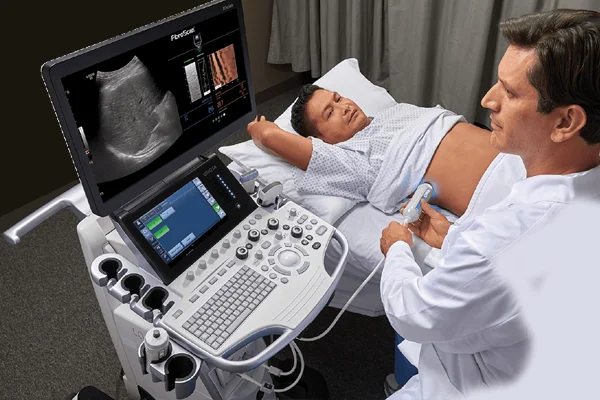
FibroScan in Anand Vihar is a non-invasive liver assessment that helps evaluate liver stiffness and fatty changes without the need for a conventional liver biopsy. It is particularly useful in the assessment and monitoring of patients with fatty liver disease, chronic liver conditions and suspected liver fibrosis.
At Dr. Rishi Raman’s gastroenterology practice in Anand Vihar, FibroScan may be recommended as part of a comprehensive liver evaluation, helping assess the condition of the liver and monitor changes over time alongside clinical assessment, blood tests and other investigations.
What Is FibroScan?
FibroScan, also known as transient elastography, is a specialized ultrasound-based technology used to assess the physical properties of the liver.
It primarily provides information about:
- Liver stiffness, which can be associated with fibrosis or scarring
- Liver fat, assessed through an attenuation-related measurement depending on the device and protocol
Unlike a liver biopsy, FibroScan does not require a needle or tissue removal.
Why Is FibroScan Done?
A gastroenterologist may recommend FibroScan for patients with conditions or risk factors such as:
- Fatty liver disease
- Metabolic dysfunction-associated steatotic liver disease (MASLD)
- Chronic hepatitis B or hepatitis C
- Suspected liver fibrosis
- Chronic liver disease
- Alcohol-related liver disease
- Abnormal liver enzymes
- Diabetes, obesity or metabolic risk factors associated with fatty liver
- Monitoring of known liver disease
The need for FibroScan depends on the patient's medical history, symptoms, laboratory results and other clinical findings.
What Does FibroScan Measure?
FibroScan primarily evaluates liver stiffness and can also provide information related to liver fat.
Liver Stiffness
Increased liver stiffness may indicate the presence of fibrosis. However, stiffness can also be influenced by factors such as inflammation, congestion and other liver-related conditions.
Therefore, FibroScan results should always be interpreted along with the patient's clinical information and other investigations.
Liver Fat
Depending on the FibroScan technology used, an additional measurement may help estimate the degree of fatty change in the liver.
This can support the evaluation of patients with suspected or known fatty liver disease.
FibroScan for Fatty Liver
Fatty liver disease is increasingly associated with metabolic conditions such as obesity, diabetes and abnormal cholesterol levels.
FibroScan can help assess patients with suspected fatty liver and provide additional information about whether there may be associated liver stiffness.
It can also be useful for monitoring liver health over time when combined with appropriate lifestyle changes, laboratory testing and medical follow-up.
FibroScan for Liver Fibrosis
Liver fibrosis develops when repeated or long-term liver injury causes scar tissue to form.
FibroScan can help estimate liver stiffness and may assist in identifying patients who require further evaluation or closer monitoring.
It is especially useful when a non-invasive assessment is preferred, although it does not replace every other liver investigation.
How Is FibroScan Performed?
The procedure is straightforward:
- The patient is positioned comfortably, usually lying on the back.
- A small amount of gel may be applied to the skin over the right side of the upper abdomen.
- A FibroScan probe is gently placed against the skin.
- The device sends controlled vibrations through the liver.
- The machine measures the response of the liver tissue.
- Multiple valid measurements are usually obtained to improve reliability.
- The results are reviewed and interpreted by the gastroenterologist.
There is no incision, injection or tissue removal.
Is FibroScan Painful?
FibroScan is generally painless and non-invasive. Patients usually feel only the gentle contact of the probe and small vibrations during the measurements.
It does not normally require sedation or anesthesia.
Preparation for FibroScan
Preparation instructions may vary depending on the clinical setting and the patient's condition. In many cases, fasting for a specified period before the examination is advised.
Patients should follow the specific instructions provided by the medical team before the test.
How Long Does FibroScan Take?
The actual measurement process is generally brief, although the total appointment time may vary depending on preparation and clinical assessment.
Since FibroScan does not involve anesthesia or an invasive procedure, patients can generally resume their normal activities after the examination unless advised otherwise.
FibroScan vs Liver Biopsy
FibroScan and liver biopsy provide different types of information.
FibroScan:
- Non-invasive
- No tissue removal
- No needle required
- Can be repeated for monitoring
- Provides an assessment of liver stiffness and, depending on the technology, liver fat
Liver Biopsy:
- Invasive tissue-sampling procedure
- Provides microscopic examination of liver tissue
- May be recommended in selected cases when more detailed information is required
Your gastroenterologist can determine whether FibroScan, blood-based assessment, imaging, biopsy or a combination of investigations is appropriate.
Can FibroScan Diagnose Cirrhosis?
FibroScan can provide valuable information about liver stiffness and may support the assessment of advanced fibrosis or cirrhosis.
However, a FibroScan result should not be interpreted in isolation. The diagnosis and stage of liver disease are determined by considering the patient's symptoms, examination, blood tests, imaging and other relevant findings.
Benefits of FibroScan
FibroScan offers several advantages for selected patients:
- Non-invasive liver assessment
- No biopsy or incision
- Generally painless
- No anesthesia required
- Useful for assessing liver stiffness
- Can support fatty liver evaluation
- May help monitor liver disease over time
- Can complement blood tests and imaging
Why Choose Dr. Rishi Raman for FibroScan in Anand Vihar?
Dr. Rishi Raman is a senior gastroenterologist specializing in gastrointestinal, digestive and liver disorders, with expertise in the evaluation and management of complex hepatology conditions.
His evidence-based approach focuses on interpreting liver investigations in the context of the patient's complete clinical picture. When FibroScan is appropriate, its findings can be combined with laboratory tests, imaging and clinical assessment to develop a more comprehensive understanding of liver health.
Comprehensive Liver & Hepatology Care
FibroScan may be part of a broader liver evaluation that can include:
- Liver function tests
- Viral hepatitis testing
- Ultrasound and other imaging
- FibroScan assessment
- Evaluation of fatty liver
- Assessment of liver fibrosis
- Management of chronic liver disease
- Monitoring of liver-related complications
- Lifestyle and metabolic risk assessment
This integrated approach helps identify liver disease at an appropriate stage and supports long-term liver health.
When Should You Consider FibroScan?
You may benefit from discussing FibroScan with a gastroenterologist if you have:
- Fatty liver detected on ultrasound
- Persistently abnormal liver enzymes
- Diabetes or metabolic risk factors
- Obesity associated with liver concerns
- Chronic hepatitis
- Suspected liver fibrosis
- Known chronic liver disease
- A history of significant alcohol-related liver injury
Early evaluation can help identify liver changes and determine whether further assessment or monitoring is required.
Frequently Asked Questions
1. What is FibroScan used for?
FibroScan is primarily used to assess liver stiffness and, depending on the device, liver fat. It can support the evaluation of fibrosis and fatty liver disease.
2. Is FibroScan painful?
No. FibroScan is generally painless and non-invasive. A probe is placed gently against the skin over the liver to obtain measurements.
3. Is FibroScan the same as a liver biopsy?
No. FibroScan is a non-invasive assessment, while a liver biopsy involves removing a small tissue sample from the liver for microscopic examination.
4. Can FibroScan detect fatty liver?
FibroScan can provide a measurement related to liver fat, depending on the technology being used. It can complement ultrasound, blood tests and other clinical assessments when evaluating fatty liver disease.
5. Can FibroScan show liver fibrosis?
FibroScan measures liver stiffness, which can help assess the likelihood and severity of liver fibrosis. However, results need to be interpreted alongside other clinical and diagnostic information.
6. How often should FibroScan be done?
There is no single schedule for everyone. The frequency depends on the underlying liver condition, previous findings, treatment and the recommendations of your gastroenterologist.